
AGENOR EstateShield
One connected layer of protection across the entire community.
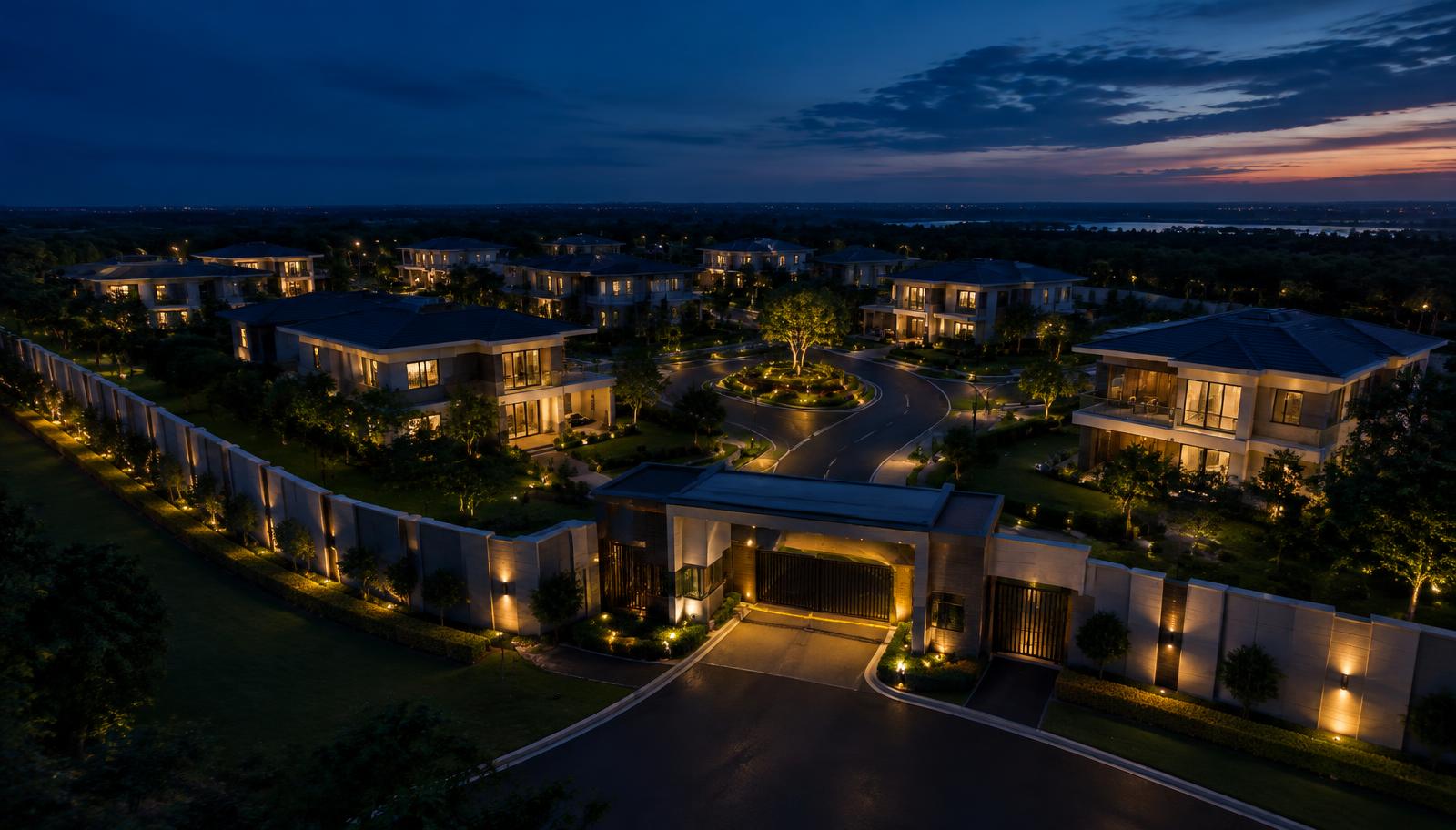
EstateShield is AGENOR's integrated security model for residential estates, gated communities, apartment complexes and master-planned developments.
Estates are difficult to secure because the environment never stops moving.
Residents arrive and leave. Contractors require access. Visitors move through controlled points. Perimeters extend across large areas. Cameras cannot see everything. Guards cannot be everywhere at once.
The answer is not simply more equipment or more people.
What EstateShield Connects
- 01
Gatehouse & Access Control
Resident, visitor, contractor and service access processes designed around control, verification and usability.
- 02
Security Personnel
Site-specific guarding, patrol and response functions integrated into clear operating procedures.
- 03
CCTV & Intelligent Video
Fixed, thermal and analytically enabled cameras positioned around actual estate risk points.
- 04
Perimeter Security
Fence, wall, sensor, camera and patrol strategies designed around the estate boundary.
- 05
Alarms & Panic Systems
Resident and common-area alarms linked to defined escalation and response procedures.
- 06
Aerial Security
Approved drone operations for perimeter observation, incident verification, thermal viewing and emergency support where appropriate.
- 07
Command & Reporting
Centralised incident coordination, evidence handling and management-level reporting.
From Alert to Action
Detect. Verify. Respond. Resolve. Report.
Step 1 of 5
Detect
A camera, perimeter sensor, alarm, access event or security officer identifies activity requiring attention.
Scenario walkthrough
- A perimeter, camera or sensor event is detected.
- The monitoring function receives the event.
- Detect: A camera, perimeter sensor, alarm, access event or security officer identifies activity requiring attention. A perimeter, camera or sensor event is detected. The monitoring function receives the event.
- Verify: Available cameras, sensor information and operator observations are used to understand the event before unnecessary escalation. Available cameras and sensors are checked. Where appropriate, lawful and operationally authorised, aerial observation may be deployed. The incident is verified and prioritised.
- Respond: The appropriate ground resource is dispatched. Where conditions, permissions and operating procedures allow, aerial observation may support incident verification or situational awareness. Ground response receives useful situational information.
- Resolve: Security personnel manage the incident according to agreed procedures and escalation requirements. The incident is managed by personnel under agreed procedures.
- Report: Relevant actions, evidence and recurring risk patterns are recorded for estate management review. Relevant evidence and reporting are retained.
A faster view of difficult areas.
Large estates often contain perimeter sections, open land, greenbelts, construction areas or internal roads that are difficult to assess quickly from the ground.
- perimeter-event verification
- thermal night observation
- open-area patrol support
- suspicious-activity assessment
- emergency reconnaissance
- infrastructure inspection
- storm or fire assessment
- authorised search support
All operations remain subject to weather, site conditions, aviation requirements, privacy considerations and approved operating procedures.
Security information should help management make better decisions.
EstateShield is designed to produce more than incident response.
- recurring perimeter events
- access-control weaknesses
- camera or sensor outages
- repeated false alarms
- infrastructure vulnerabilities
- recurring incident locations
- service-performance issues
- areas requiring capital improvement
EstateShield Deployment Models
- 01 / Model
EstateShield Essential
For smaller communities that need a stronger security architecture around existing people and systems. Typical focus: assessment, integration planning, monitoring, procedures, reporting and targeted security improvements.
- 02 / Model
EstateShield Advanced
For established estates requiring stronger perimeter intelligence, coordinated response and mobile aerial support.
- 03 / Model
EstateShield Autonomous Infrastructure
For larger environments where permanent drone-docking infrastructure may be operationally and legally suitable. This model remains subject to detailed aviation, site, safety, connectivity and operating assessments.
- 04 / Model
EstateShield Command
For large developments, multi-estate groups or high-security residential environments requiring centralised oversight and multi-zone coordination.
Every model is scoped individually. Request a tailored assessment.
Request a tailored assessmentNo two communities should receive the same security plan.
EstateShield design considers:
- estate size and layout
- number of homes and residents
- perimeter type and length
- entrances and exits
- open land and blind areas
- current security personnel
- existing cameras and alarms
- access-control environment
- connectivity
- incident history
- privacy requirements
- local operating conditions
Next step
See what EstateShield would look like in your community.
We will start with the estate, the current protection model and the actual risk profile.