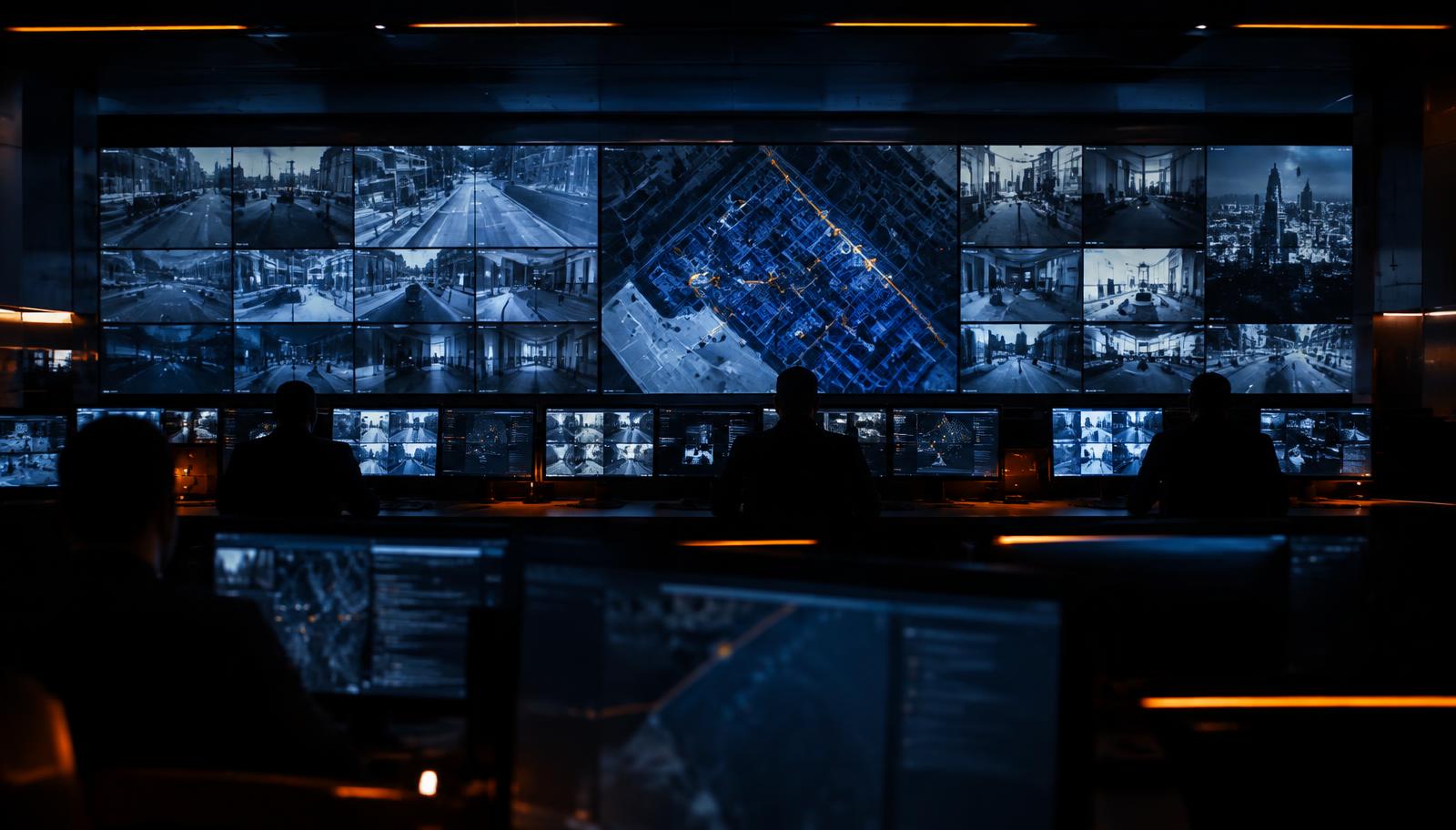
AGENOR Intelligence
Turn security activity into an operating picture.
AGENOR Intelligence is the strategic technology layer designed to connect security information, incident workflows and management reporting across the environment.
More alerts do not automatically create more awareness.
A site may have dozens of cameras, multiple alarm panels, access-control systems, radios, guards and incident logs — yet still struggle to understand what is happening during an event.
The problem is fragmentation.
- CCTV
- Alarms
- Access Control
- Sensors
- Personnel
- Drones
 AGENOR INTELLIGENCE
- Detect
- Verify
- Respond
- Resolve
- Report
Connected Inputs
Potential information sources include:
- CCTV
- thermal cameras
- alarms
- access-control events
- perimeter sensors
- guard observations
- panic activations
- authorised drone missions
- system-health alerts
- site maps and geospatial context
The Workflow
Detect → Verify → Respond → Resolve → Report
Step 1 of 5
Detect
Receive relevant security events from people and systems.
- Detect: Receive relevant security events from people and systems.
- Verify: Use available information to understand what is happening and reduce unnecessary escalation.
- Respond: Coordinate the appropriate resource and provide useful situational information.
- Resolve: Track actions and outcomes through the incident lifecycle.
- Report: Preserve relevant evidence, timelines and management information.
AI-Assisted Operations · Capability in Development
AI should help people focus on what matters.
Potential AI-assisted functions include:
- video-event detection
- event prioritisation
- anomaly identification
- system-health monitoring
- report drafting
- trend analysis
- recurring-risk identification
Human operators remain responsible for consequential security decisions.
Customer View · Concept Interface
Give management visibility without overwhelming them with raw security data.
A future client portal may provide permission-controlled access to:
- 01
Incident summaries
Concise records of what happened, what was done and how it closed.
- 02
System availability
Status of cameras, sensors and connected systems.
- 03
Security trends
Recurring locations, times and event types.
- 04
Service reports
Periodic reporting against agreed service scope.
- 05
Approved aerial-mission records
Logs of authorised flights linked to incidents or inspections.
- 06
Maintenance events
Faults, outages and maintenance actions.
- 07
Assessment recommendations
Open actions from assessments and reviews.
- 08
Management dashboards
A consolidated view for boards and executives.
Concept Interface — planned capability reference, not a description of a live system.